동일한 URI 에서 리소스의 서로 다른 버전을 제공하기 위해 사용하는 메커니즘
300(다중 선택) 및 406 등을 사용하여 폴백 형식으로 이루어짐브라우저는 URL 과 몇 개의 HTTP 헤더를 전송한다.
서버는 그 헤더를 기반으로 클라이언트에게 제공할 최선의 컨텐츠를 선택한다.
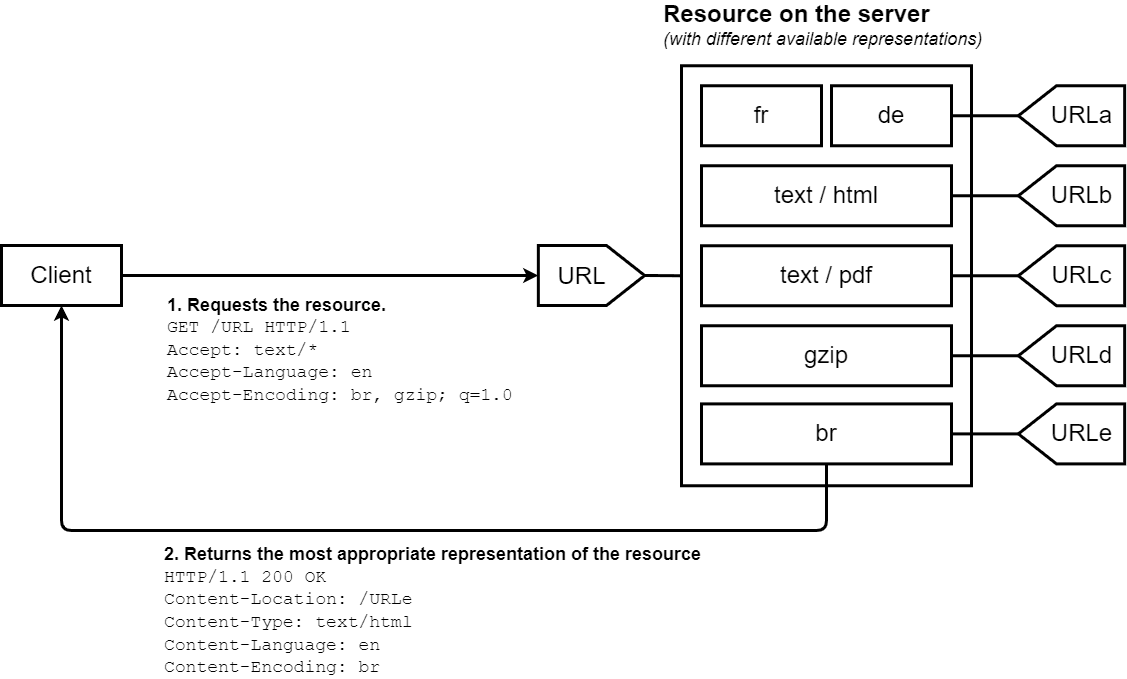
서버는 어떤 헤더가 사용되는지를 가르키기 위해 Vary 를 사용한다. - 캐시를 최적으로 동작하게 해줌
( 특정 헤더가 달라졌거나, 없어졌으면 캐시 적용하지 않고 다른 요소로 처리 )
가장 일반적인 방식이나, 몇 가지 결점 역시 존재한다.
에이전트가 처리하고자 하는 미디어 리소스의 MIME 타입
컨텍스트에 따라 다양할 수 있다. ( 주소창에 입력된 문서를 받는다거나, 이미지 & 비디오 등을 다운 받는다거나 )
일반적인, 웹 브라우저는
text/html,application/xhtml+xml,application/xml;q=0.9,image/avif,image/webp,image/apng,*/*;q=0.8,application/signed-exchange;v=b3;q=0.7
이런 식으로 보낸다.
html -> xml -> webp,avif ->*.*
요청을 전송하는 브라우저를 식별하게 해준다.
이 User-Agent 를 담지 않으면, 요청을 거부하는 서비스들도 있다.
EX) GITHUB API, pexels
그러면, 스프링에선? 매우 간편하게 협상을 처리할 수 있다.
개발자가 직접 코드를 작성하지 않아도
ContentNegotiationManager 가 여러 HttpMessageConverter 들과 동작해서 처리해준다.
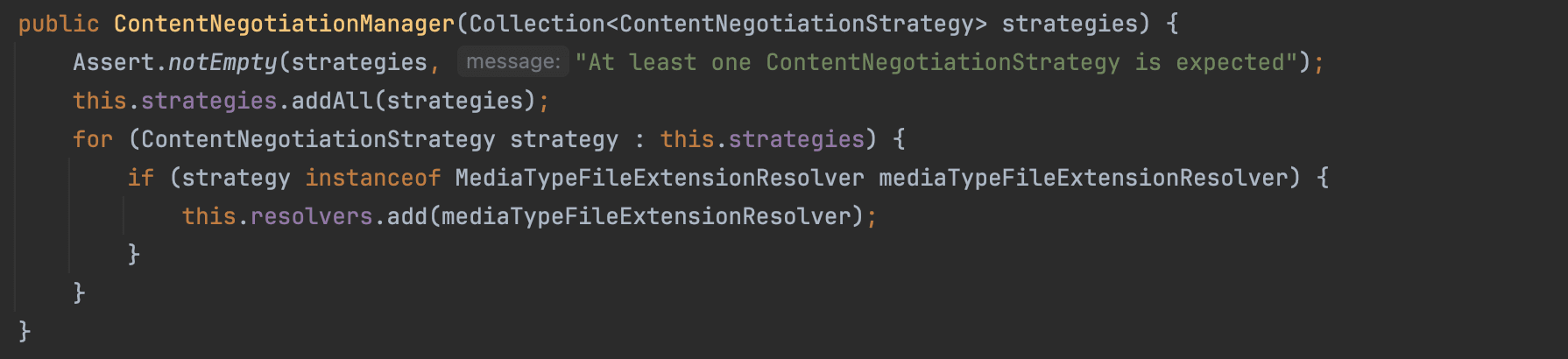
Strategy 들을 의존성 주입 받아서 추가하고, resolver 라면 추가해준다.
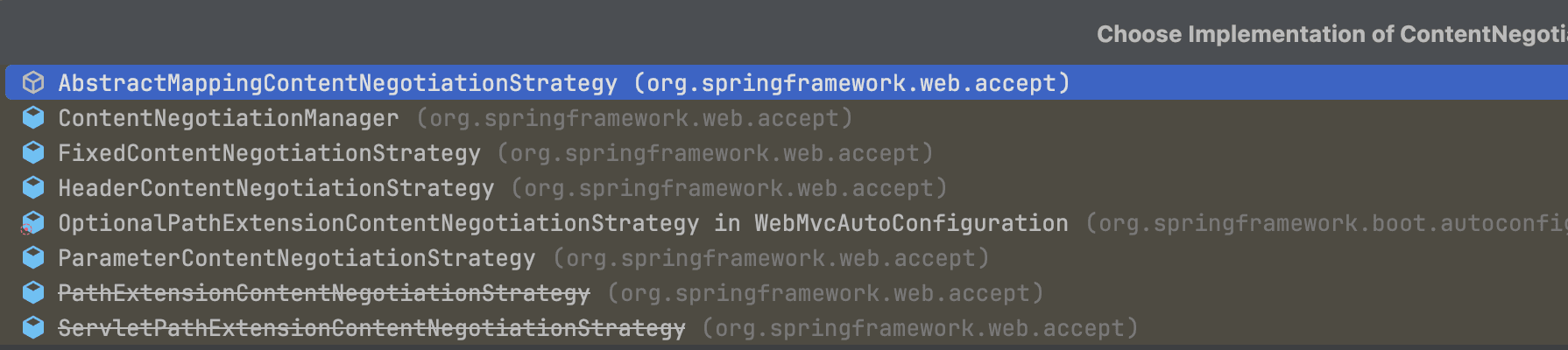
?format=xml ) - 비활성화HeaderContentNegotiationStrategy 가 우리가 위에서 본 Accept 기반 전략이다.
@Override
public List<MediaType> resolveMediaTypes(NativeWebRequest request)
       throws HttpMediaTypeNotAcceptableException {
       ...
}
ContentNegotiationStrategy 가 요청을 기반으로 받을 수 있는 미디어 타입을 반환하면
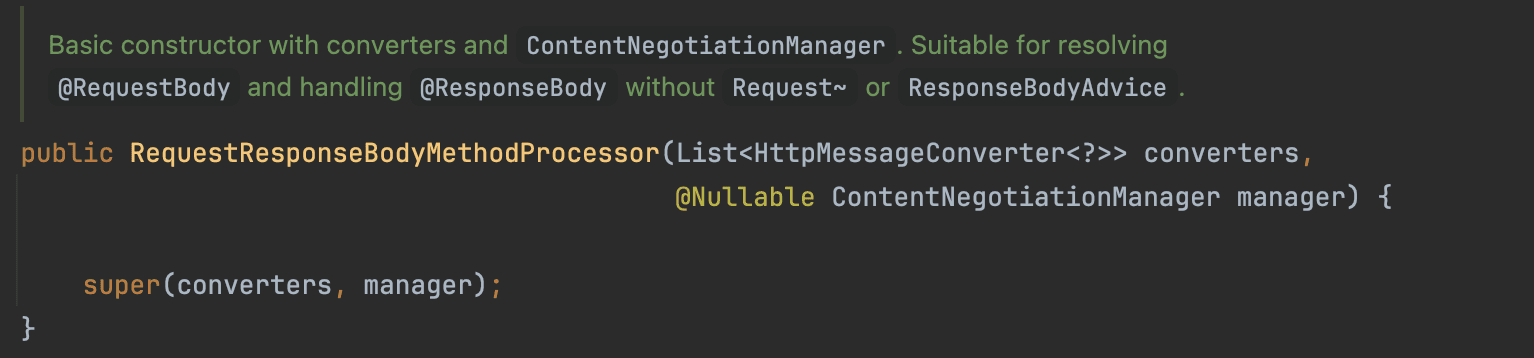
RequestResponseBodyMethodProcessor 가
미디어 타입을 기반으로 변환을 처리해서 반환해준다.
/**
 * Writes the given return type to the given output message. * @param value the value to write to the output message
 * @param returnType the type of the value
 * @param inputMessage the input messages. Used to inspect the {@code Accept} header.
 * @param outputMessage the output message to write to
 * @throws IOException thrown in case of I/O errors
 * @throws HttpMediaTypeNotAcceptableException thrown when the conditions indicated
 * by the {@code Accept} header on the request cannot be met by the message converters
 * @throws HttpMessageNotWritableException thrown if a given message cannot
 * be written by a converter, or if the content-type chosen by the server * has no compatible converter. */@SuppressWarnings({"rawtypes", "unchecked", "NullAway"})
protected <T> void writeWithMessageConverters(@Nullable T value, MethodParameter returnType,
       ServletServerHttpRequest inputMessage, ServletServerHttpResponse outputMessage)
       throws IOException, HttpMediaTypeNotAcceptableException, HttpMessageNotWritableException {


		...
		if (selectedMediaType != null) {
		    selectedMediaType = selectedMediaType.removeQualityValue();

		    ResolvableType targetResolvableType = null;
		    for (HttpMessageConverter converter : this.messageConverters) {
			    ...

		switch (converterTypeToUse) {
		    case BASE -> converter.write(body, selectedMediaType, outputMessage);
		    case GENERIC -> ((GenericHttpMessageConverter) converter).write(body, targetType, selectedMediaType, outputMessage);
		    case SMART -> ((SmartHttpMessageConverter) converter).write(body, targetResolvableType, selectedMediaType, outputMessage, null);
		}
MediaType 을 기반으로, converter 가 선택되어 본문을 작성함으로써 똑똑하게 Content Negotiation 이 처리된다.
그런데, 이러면 너무 자동으로만 이루어지는 것 같지 않은가?
스프링이 제공해주는 WebMvcConfigurer 에서 협상을 설정할 수 있다.
@Override
public void configureContentNegotiation(ContentNegotiationConfigurer configurer) {
    // Accept Header 전략 사용 ( 기본값 true )
    configurer.ignoreAcceptHeader(false)
        .defaultContentType(MediaType.APPLICATION_JSON);
}
default 를 통해, 협상을 못 찾으면 기본 MediaType 도 지정 가능하다.
사실, 이 내용 때문에 학습을 했다 ㅋ.ㅋ
implementation 'com.fasterxml.jackson.dataformat:jackson-dataformat-xml'이번 이슈를 진행하며, xml 을 파싱해야 하는 요구사항이 있어 의존성을 추가했다.

기존과 같이 JSON 으로 나와야 하는 API 가
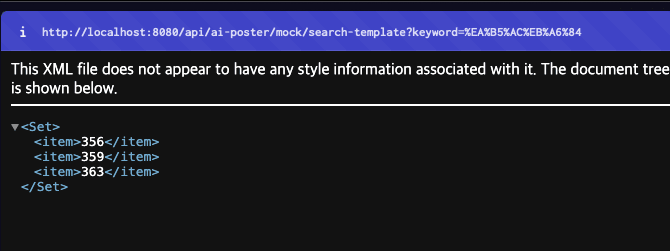
XML 로 나오는걸 볼 수 있다.
@Autowired
List<HttpMessageConverter> messageConverters;

@PostConstruct
public void init() {
    log.info("Application started : {}", messageConverters);
}
아무곳에서나 이렇게 HttpMessageConverter 를 찍어보면
[org.springframework.http.converter.StringHttpMessageConverter@13d26ed3, org.springframework.http.converter.xml.MappingJackson2XmlHttpMessageConverter@39f1bf06, org.springframework.http.converter.json.MappingJackson2HttpMessageConverter@2cea567b]와 같이 XmlHttpMessageConverter 가 추가된 걸 볼 수 있다.
@Override
public void extendMessageConverters(List<HttpMessageConverter<?>> converters) {
    converters.removeIf(converter -> converter instanceof MappingJackson2XmlHttpMessageConverter);
}
instanceof 로 XmlConverter 를 찾아서 제거하자.
그러면, 기존처럼 JSON 을 반환하는걸 볼 수 있다!